

Manuel Wimmer

Privatdoz. Mag.rer.soc.oec. Dr.rer.soc.oec.
Manuel Wimmer
- Email: manuel.wimmer@tuwien.ac.at
- Phone:
- Office: (1040 Wien, Favoritenstrasse 11)
- About: UML, Object-oriented Modeling, Domain-specific Modeling, Metamodeling, Model Transformation, Software Engineering, Web Engineering, Model Engineering, Industrial Engineering, Automation Engineering, Multi-disciplinary Engineering
- Orcid:
- Keywords: Model Driven Engineering, Web Engineering, Model Transformation
- Roles: Affiliated
Publications
How do we teach modelling and model-driven engineering?: a survey
Federico CiccozziMichalis FamelisLeen LambersSebastien MosserRichard F. PaigeAlfonso PierantonioArend RensinkRick SalayGabi TaentzerAntonio VallecilloManuel Wimmer
Ciccozzi, F., Famelis, M., Kappel, G., Lambers, L., Mosser, S., Paige, R. F., Pierantonio, A., Rensink, A., Salay, R., Taentzer, G., Vallecillo, A., & Wimmer, M. (2018). How do we teach modelling and model-driven engineering?: a survey. In Proceedings of the 21st ACM/IEEE International Conference on Model Driven Engineering Languages and Systems: Companion Proceedings. MODELS 2018, Kopenhagen, Denmark. ACM. https://doi.org/10.1145/3270112.3270129
Interoperability and Integration in Future Production Systems
Manuel WimmerSiegfried ReichWernher BehrendtStefan ThalmannGeorg WeichhartAlois ZoitlKeywords:
Astract: Research in areas of Internet of Things (IoT), Industry 4.0 (I4.0), Cyber Physical Systems (CPS), consider system-of-systems composed of hardware and software systems that seamless work together. Interoperability ranges from compatibility (systems do not disturb other systems, but no interaction between systems) to integration (systems that share a common model/worldview). Between these extremes a continuum of interoperability exists.
In any case, interoperability is a model-driven approach - in contrast to data-driven or machine-learning approaches, for example. In general, models contain modules, connections, and behavior descriptions of different types.
Integration and interoperability may not only be seen as (goal) states but also as processes. Changes in one system might trigger adaptation in other systems. However, in loose integration and interoperability settings there is more support for the evolution of models.
Huemer, C., Kappel, G., Wimmer, M., Proper, H. A., Reich, S., Behrendt, W., Thalmann, S., Weichhart, G., & Zoitl, A. (2018). Interoperability and Integration in Future Production Systems. In 2018 IEEE 20th Conference on Business Informatics (CBI). IEEE Computer Society, Wien, Austria. IEEE Computer Society. https://doi.org/10.1109/cbi.2018.10067
A Variability Information Model for OPC UA
Bernhard WallyAlexandra MazakManuel WimmerKeywords:
Astract: OPC Unified Architecture (UA) is a powerful technology for modeling and instantiating domain-specific information in a standardized manner. Its initial application scenario is in the domain of automated production systems, that increasingly have to deal with variability information, (i) regarding the products being manufactured and (ii) regarding the production systems themselves. In this work we propose a non-intrusive OPC UA information model for the modeling and querying of variability information using feature models, which are a well-known paradigm in the management of software product lines. Our information model can be applied "aside" existing domain information without interfering with their internal structure.
Wally, B., Huemer, C., Mazak, A., & Wimmer, M. (2018). A Variability Information Model for OPC UA. In Proceedings of the 23rd International Conference on Emerging Technologies and Factory Automation (ETFA) (pp. 1033–1036). http://hdl.handle.net/20.500.12708/58818
Model-Driven Systems Engineering: Principles and Application in the CPPS Domain
Luca BerardinelliAlexandra MazakOliver AltManuel Wimmer
Berardinelli, L., Mazak, A., Alt, O., Wimmer, M., & Kappel, G. (2017). Model-Driven Systems Engineering: Principles and Application in the CPPS Domain. In Multi-Disciplinary Engineering for Cyber-Physical Production Systems (pp. 261–299). Springer. https://doi.org/10.1007/978-3-319-56345-9_11
Rahmenwerk zur modellbasierten horizontalen und vertikalen Integration von Standards für Industrie 4.0
Alexandra MazakManuel WimmerWolfgang KastnerKeywords:
Astract: In Anlehnung an die Umsetzungsempfehlung des deutschen Arbeitskreises zu Industrie 4.0 widmen wir uns in diesem Kapitel dem offenen Handlungsfeld der Standardisierung und Referenzarchitektur im Kontext einer modellbasierten horizontalen und vertikalen Integration. Wir zeigen, dass die Zusammenführung international etablierter Standards genutzt werden kann, um eine flexible Informationsarchitektur zu schaffen. Zu diesem Zweck präsentieren wir ein offenes, dreidimensionales Rahmenwerk von Standards für Industrie 4.0. Die erste Dimension berücksichtigt die Unterscheidung zwischen den unterschiedlichen Ebenen in einem Unternehmen, in Anlehnung an die klassische Automatisierungspyramide. Die zweite Dimension unterscheidet zwischen den internen und den externen Aspekten der horizontalen und vertikalen Integration. Die dritte Dimension differenziert zwischen der wirtschaftlichen Tätigkeit der teilneh-
menden Unternehmen im Wertschöpfungsnetzwerk und den technischen Aspekten des nahtlosen Daten- und Informationsaustausches.
Mazak, A., Wimmer, M., Huemer, C., Kappel, G., & Kastner, W. (2016). Rahmenwerk zur modellbasierten horizontalen und vertikalen Integration von Standards für Industrie 4.0. In B. Vogel-Heuser (Ed.), Handbuch Industrie 4.0 (pp. 1–22). Springer-Verlag Berlin Heidelberg. https://doi.org/10.1007/978-3-662-45537-1_94-1
Projects
Multi-Paradigm Modelling for Cyber-Physical Systems (MPM4CPS)
Name: MPM4CPS; Title: Multi-Paradigm Modelling for Cyber-Physical Systems (MPM4CPS); Begins On: 2014-10-01; Ends On: 2019-05-31; Context: European Cooperation in Science and Technology (COST); View Project WebsiteCOSIMO: Collaborative Configuration Systems Integration and Modeling
Name: COSIMO; Title: COSIMO: Collaborative Configuration Systems Integration and Modeling; Begins On: 2014-01-01; Ends On: 2017-05-30; Context: Vienna Business Agency (WAW); View Project WebsiteARTIST: Advanced software-based seRvice provisioning and migraTIon of legacy Software
Name: ARTIST; Title: ARTIST: Advanced software-based seRvice provisioning and migraTIon of legacy Software; Begins On: 2012-10-01; Ends On: 2015-09-30; Context: European Commission; View Project WebsiteTROPIC: A Framework for Model Transformations on Petri Nets in Color
Name: TROPIC; Title: TROPIC: A Framework for Model Transformations on Petri Nets in Color; Begins On: 2009-03-01; Ends On: 2012-08-31; Context: Austrian Science Fund (FWF); View Project WebsiteAMOR: Adaptable Model Versioning
Name: AMOR; Title: AMOR: Adaptable Model Versioning; Begins On: 2009-02-01; Ends On: 2011-09-30; Context: SparxSystems Software GmbH; View Project WebsiteTeam
Business Informatics Group, TU Wien
Professors
Christian Huemer
Ao.Univ.Prof. Mag.rer.soc.oec.Dr.rer.soc.oec.
Dominik Bork
Associate Prof. Dipl.-Wirtsch.Inf.Univ.Dr.rer.pol.
Gerti Kappel
O.Univ.Prof.in Dipl.-Ing.inMag.a Dr.in techn.
Henderik Proper
Univ.Prof. PhD


Researchers
Aleksandar Gavric
Univ.Ass. MEng MSc BEngCharlotte Roos R. Verbruggen
Univ.Ass. PhDJonas Max Lindner
Univ.Ass. MSc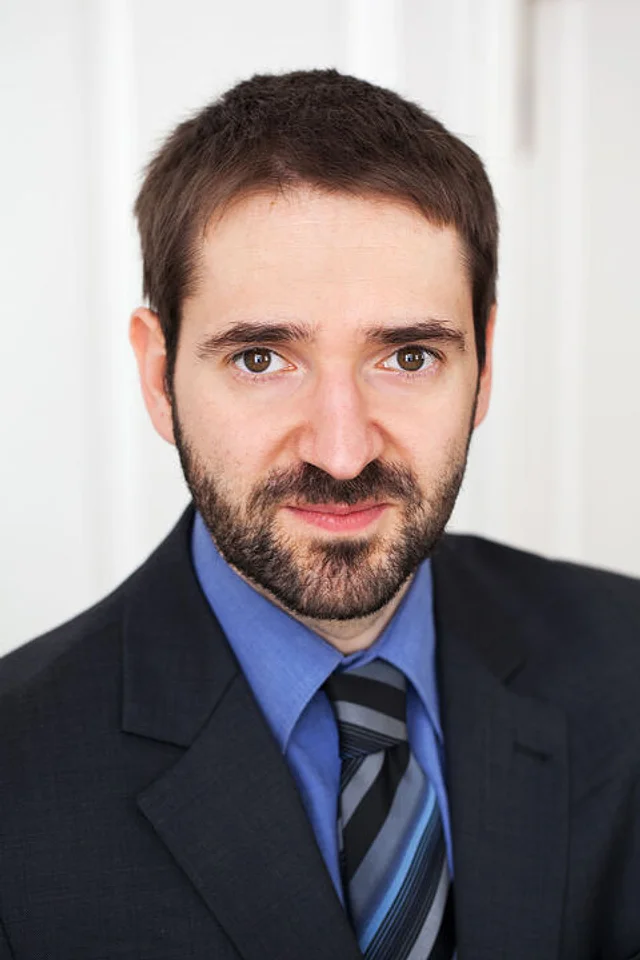
Marco Huymajer
Senior Lecturer Dipl.-Ing. BSc
Marianne Schnellmann
Univ.Ass. MScMarion Murzek
Senior Lecturer Mag.a rer.soc.oec.Dr.in rer.soc.oec.
Marion Scholz
Senior Lecturer Dipl.-Ing.inMag.a rer.soc.oec.
Miki Zehetner
Univ.Ass. DI Bakk.rer.soc.oec. MSc