

Gerti Kappel
O.Univ.Prof.in Dipl.-Ing.in
Mag.a Dr.in techn.
Gerti Kappel
- Email: gertrude.kappel@tuwien.ac.at
- Phone: +43-1-58801-18870
- Office: FB0109 (1040 Wien, Erzherzog-Johann-Platz 1)
- About:
Gerti Kappel is full professor at the Institute of Information Systems Engineering at TU Wien, in the Business Informatics Group. Prior to that, from 1993 to 2001, she was a full professor of computer science (database systems) and head of the Department of Information Systems at the Johannes Kepler University Linz.
From 2016 to 2019, she was a member of the dean’s team of the Faculty of Informatics responsible for research, diversity, and financial affairs. Since the beginning of 2020 she acts as the dean of the Faculty of Informatics at TU Wien.
Her current research interests include Model Engineering, Web Engineering, and Process Engineering, with a special emphasis on cyber-physical production systems. Striving for the unity of research and teaching, she co-authored and co-edited among others „UML@Work“ (dpunkt.verlag, 3rd ed, 2005), „UML@Classroom“ (Springer, 2015), and „Web Engineering“ (Wiley, 2006).
- Orcid: 0000-0002-4758-9436
- Keywords: Process Engineering, Data Engineering, Services Engineering, UML and XML, Business Process Management (BPM), Model Engineering, Workflow Management Systems (WFMS), Web Engineering, Object Orientation, Software Engineering
- Roles: Head of Services, Full Professor
Publications
Keywords:
Astract: Model-driven software engineering has gained momentum in academia as well as in industry for improving the development of evolving software by providing appropriate abstraction mechanisms in terms of software models and transformations thereof. With the rise of cyber-physical systems in general, and cyber-physical production systems in particular, the interplay between several engineering disciplines, such as software engineering, mechanical engineering and electrical engineering, becomes a must. Thus, a shift from pure software models to system models has to take place to develop the full potential of model-driven engineering for the whole production domain. System Models are also essential to raise the level of flexibility of production systems even further in order to better react to changing requirements, since systems are no longer designed to be, but they have to be designed to evolve. In this talk, we will present ongoing work of applying and further developing model-driven techniques, such as consistency management and co-evolution support, for the production domain.
Kappel, G. (2016). From Software Modeling to System Modeling - Transforming the Change. FK Seminar Arbeit 4.0, Paderborn, Germany. http://hdl.handle.net/20.500.12708/86306
Keywords:
Astract: Model-driven software engineering has gained momentum in academia as well as in industry for improving the development of evolving software by providing appropriate abstraction mechanisms in terms of software models and transformations thereof. With the rise of cyber-physical systems in general, and cyber-physical production systems in particular, the interplay between several engineering disciplines, such as software engineering, mechanical engineering and electrical engineering, becomes a must. Thus, a shift from pure software models to cross-disciplinary models has to take place to develop the full potential of model-driven engineering for the whole production domain. Cross-disciplinary models are also essential to raise the level of flexibility of production systems in order to better react to changing requirements, since systems are no longer designed to be, but they have to be designed to evolve. In this talk, we will have a look at current practice of good, bad, and ugly cross-disciplinary modeling. We will point to ongoing work of (hopefully) improving this situation by applying and further developing model-driven techniques such as consistency management and co-evolution support for the production domain.
Kappel, G. (2016). Cross-disciplinary Modeling - the Good, the Bad, and the Ugly. Modellierung 2016, Karlsruhe, Germany. http://hdl.handle.net/20.500.12708/86307
Keywords:
Astract: Model-driven software engineering has gained momentum in academia as well as in industry for improving the development of evolving software by providing appropriate abstraction mechanisms in terms of software models and transformations thereof. With the rise of cyber-physical systems in general, and cyber-physical production systems in particular, the interplay between several engineering disciplines, such as software engineering, mechanical engineering and electrical engineering, becomes a must. Thus, a shift from pure software models to cross-disciplinary models has to take place to develop the full potential of model-driven engineering for the whole production domain. Cross-disciplinary models are also essential to raise the level of flexibility of production systems in order to better react to changing requirements, since systems are no longer designed to be, but they have to be designed to evolve. In this talk, we will have a look at current practice of cross-disciplinary modeling with special emphasis on good, bad, and ugly habits. We will point to ongoing work of (hopefully) improving this situation by applying and further developing model-driven techniques such as consistency management and co-evolution support for the production domain.
Kappel, G. (2016). Cross-disciplinary Modeling - the Good, the Bad, and the Ugly. IEEE QRS 2016 Software Quality, Reliability & Security, Vienna, Austria. http://hdl.handle.net/20.500.12708/86308
Keywords:
Astract: Model-driven software engineering has gained momentum in academia as well as in industry for improving the development of evolving software by providing appropriate abstraction mechanisms in terms of software models and transformations thereof. With the rise of cyber-physical systems in general, and cyber-physical production systems in particular, the interplay between several engineering disciplines, such as software engineering, mechanical engineering and electrical engineering, becomes a must. Thus, a shift from pure software models to cross-disciplinary models has to take place to develop the full potential of model-driven engineering for the whole production domain. Cross-disciplinary models are also essential to raise the level of flexibility of production systems in order to better react to changing requirements, since systems are no longer designed to be, but they have to be designed to evolve. In this talk, we will have a look at current practice of cross-disciplinary modeling with special emphasis on good, bad, and ugly habits. We will point to ongoing work of (hopefully) improving this situation by applying and further developing model-driven techniques such as consistency management and co-evolution support for the production domain.
Kappel, G. (2016). Cross-disciplinary Modeling - the Good, the Bad, and the Ugly. womENcourage 2016, Linz, Austria. http://hdl.handle.net/20.500.12708/86309
UML@Classroom: An Introduction to Object-Oriented Modeling
 Martina Seidl
Keywords:
Astract: This textbook mainly addresses beginners and readers with a basic knowledge of object-oriented programming languages like Java or C#, but with little or no modeling or software engineering experience - thus reflecting the majority of students in introductory courses at universities. Using UML, it introduces basic modeling concepts in a highly precise manner, while refraining from the interpretation of rare special cases.
After a brief explanation of why modeling is an indispensable part of software development, the authors introduce the individual diagram types of UML (the class and object diagram, the sequence diagram, the state machine diagram, the activity diagram, and the use case diagram), as well as their interrelationships, in a step-by-step manner. The topics covered include not only the syntax and the semantics of the individual language elements, but also pragmatic aspects, i.e., how to use them wisely at various stages in the software development process. To this end, the work is complemented with examples that were carefully selected for their educational and illustrative value.
Overall, the book provides a solid foundation and deeper understanding of the most important object-oriented modeling concepts and their application in software development. An additional website (www.uml.ac.at) offers a complete set of slides to aid in teaching the contents of the book, exercises and further e-learning material.
Seidl, M., Scholz, M., Huemer, C., & Kappel, G. (2015). UML@Classroom: An Introduction to Object-Oriented Modeling. In Undergraduate Topics in Computer Science. Springer. https://doi.org/10.1007/978-3-319-12742-2
Teaching
Seminar for Master Students in Business Informatics
Semester: 2026S; Nr: 180.779; Type: SE; Hours: 1.0; Language: English; View on TISSResearch Seminar
Semester: 2026S; Nr: 188.446; Type: SE; Hours: 2.0; Language: if required in English; View on TISSLiterature Seminar for PhD Students
Semester: 2026S; Nr: 188.512; Type: SE; Hours: 2.0; Language: German; View on TISSBachelor Thesis for Informatics and Business Informatics
Semester: 2026S; Nr: 188.926; Type: PR; Hours: 5.0; Language: if required in English; View on TISSProject in Computer Science 1
Semester: 2026S; Nr: 194.145; Type: PR; Hours: 4.0; Language: if required in English; View on TISSProject in Computer Science 2
Semester: 2026S; Nr: 194.146; Type: PR; Hours: 4.0; Language: if required in English; View on TISSIntroduction to Quantum Algorithms
Semester: 2026S; Nr: 199.022; Type: VU; Hours: 2.0; Language: English; View on TISSSeminar for Master Students in Business Informatics
Semester: 2025W; Nr: 180.779; Type: SE; Hours: 1.0; Language: English; View on TISSResearch Seminar
Semester: 2025W; Nr: 188.446; Type: SE; Hours: 2.0; Language: if required in English; View on TISSLiterature Seminar for PhD Students
Semester: 2025W; Nr: 188.512; Type: SE; Hours: 2.0; Language: German; View on TISSBachelor Thesis for Informatics and Business Informatics
Semester: 2025W; Nr: 188.926; Type: PR; Hours: 5.0; Language: if required in English; View on TISSScientific Research and Writing
Semester: 2025W; Nr: 193.052; Type: SE; Hours: 2.0; Language: German; View on TISSProject in Computer Science 1
Semester: 2025W; Nr: 194.145; Type: PR; Hours: 4.0; Language: if required in English; View on TISSSustainability in Computer Science
Semester: 2025W; Nr: 194.155; Type: VU; Hours: 2.0; Language: English; View on TISSSeminar in Computer Science (Model Engineering)
Semester: 2025W; Nr: 194.198; Type: SE; Hours: 2.0; Language: German; View on TISSProjects
Digitale Kompetenzen @ Parlament
Name: DKP; Title: Digitale Kompetenzen @ Parlament; Begins On: 2021-04-01; Ends On: 2021-09-30; Context: Parlamentsdirektion; View Project WebsiteIFC-Roundtrip und Plangrafiken
Name: IFC-Roundtrip und Plangrafiken; Title: IFC-Roundtrip und Plangrafiken; Begins On: 2019-01-01; Ends On: 2020-06-30; Context: tbw solutions ZT GesmbH; View Project WebsiteVienna Informatics Living Lab
Name: Vienna Informatics Living Lab; Title: Vienna Informatics Living Lab; Begins On: 2018-08-01; Ends On: 2019-07-31; Context: Vienna Business Agency (WAW); View Project WebsiteMulti-Paradigm Modelling for Cyber-Physical Systems (MPM4CPS)
Name: MPM4CPS; Title: Multi-Paradigm Modelling for Cyber-Physical Systems (MPM4CPS); Begins On: 2014-10-01; Ends On: 2019-05-31; Context: European Cooperation in Science and Technology (COST); View Project WebsiteCOSIMO: Collaborative Configuration Systems Integration and Modeling
Name: COSIMO; Title: COSIMO: Collaborative Configuration Systems Integration and Modeling; Begins On: 2014-01-01; Ends On: 2017-05-30; Context: Vienna Business Agency (WAW); View Project WebsiteARTIST: Advanced software-based seRvice provisioning and migraTIon of legacy Software
Name: ARTIST; Title: ARTIST: Advanced software-based seRvice provisioning and migraTIon of legacy Software; Begins On: 2012-10-01; Ends On: 2015-09-30; Context: European Commission; View Project WebsiteDARWIN - Model-driven Development and Evolution of Semantic Infrastructures
Name: DARWIN; Title: DARWIN - Model-driven Development and Evolution of Semantic Infrastructures; Begins On: 2012-03-01; Ends On: 2015-02-28; Context: Austrian Research Promotion Agency (FFG); View Project WebsiteTROPIC: A Framework for Model Transformations on Petri Nets in Color
Name: TROPIC; Title: TROPIC: A Framework for Model Transformations on Petri Nets in Color; Begins On: 2009-03-01; Ends On: 2012-08-31; Context: Austrian Science Fund (FWF); View Project WebsiteAMOR: Adaptable Model Versioning
Name: AMOR; Title: AMOR: Adaptable Model Versioning; Begins On: 2009-02-01; Ends On: 2011-09-30; Context: SparxSystems Software GmbH; View Project WebsiteDevelopment of a WEB-based database for the global administration of CAN-Data
Name: Rosenbauer-DB; Title: Development of a WEB-based database for the global administration of CAN-Data; Begins On: 2008-09-01; Ends On: 2009-04-30; Context: Rosenbauer; View Project WebsiteModel-Driven Web Engineering net
Name: MDWEnet; Title: Model-Driven Web Engineering net; Begins On: 2006-12-01; Ends On: 2010-12-31; Context: Johannes Kepler Universität Linz; View Project WebsiteTRACK and TRADE: Creating a Data Mart for Floating Car Data
Name: TRACK™ Title: TRACK and TRADE: Creating a Data Mart for Floating Car Data; Begins On: 2006-10-01; Ends On: 2008-09-30; Context: European Commission; View Project WebsiteModelCVS: A Semantic Infrastructure for Model-based Tool Integration
Name: ModelCVS; Title: ModelCVS: A Semantic Infrastructure for Model-based Tool Integration; Begins On: 2006-01-01; Ends On: 2007-12-31; Context: ARIKAN Productivity Group GesmbH; View Project WebsiteZELESSA: An Enabler for Real-time Business Intelligence
Name: ZELESSA; Title: ZELESSA: An Enabler for Real-time Business Intelligence; Begins On: 2006-01-01; Ends On: 2007-06-30; Context: Österr. Nationalbibliothek; View Project WebsiteAdmina.at goes Austria
Name: Admina.at; Title: Admina.at goes Austria; Begins On: 2005-12-01; Ends On: 2007-09-30; Context: Federal Ministry of Science and Research (bm:wf); View Project WebsiteWomen's Postgraduate College for Internet Technologies
Name: WIT; Title: Women's Postgraduate College for Internet Technologies; Begins On: 2003-01-01; Ends On: 2007-12-31; Context: European Commission; View Project WebsiteTeam
Business Informatics Group, TU Wien
Professors
Christian Huemer
Ao.Univ.Prof. Mag.rer.soc.oec.Dr.rer.soc.oec.
Dominik Bork
Associate Prof. Dipl.-Wirtsch.Inf.Univ.Dr.rer.pol.
Gerti Kappel
O.Univ.Prof.in Dipl.-Ing.inMag.a Dr.in techn.
Henderik Proper
Univ.Prof. PhD


Researchers
Aleksandar Gavric
Univ.Ass. MEng MSc BEngCharlotte Roos R. Verbruggen
Univ.Ass. PhDJonas Max Lindner
Univ.Ass. MSc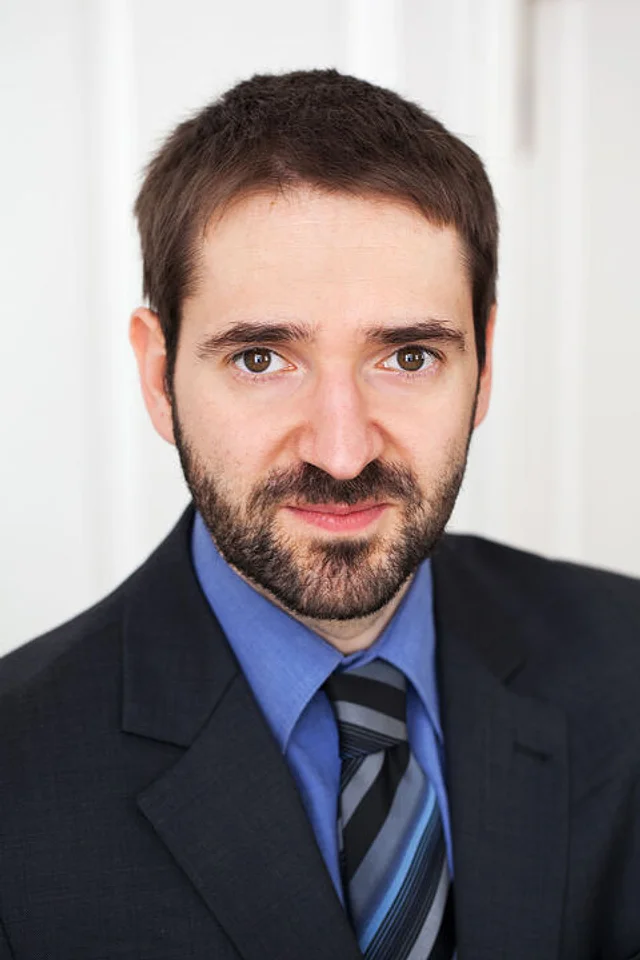
Marco Huymajer
Senior Lecturer Dipl.-Ing. BSc
Marianne Schnellmann
Univ.Ass. MScMarion Murzek
Senior Lecturer Mag.a rer.soc.oec.Dr.in rer.soc.oec.
Marion Scholz
Senior Lecturer Dipl.-Ing.inMag.a rer.soc.oec.
Miki Zehetner
Univ.Ass. DI Bakk.rer.soc.oec. MSc