

Manuel Wimmer

Privatdoz. Mag.rer.soc.oec. Dr.rer.soc.oec.
Manuel Wimmer
- Email: manuel.wimmer@tuwien.ac.at
- Phone:
- Office: (1040 Wien, Favoritenstrasse 11)
- About: UML, Object-oriented Modeling, Domain-specific Modeling, Metamodeling, Model Transformation, Software Engineering, Web Engineering, Model Engineering, Industrial Engineering, Automation Engineering, Multi-disciplinary Engineering
- Orcid:
- Keywords: Model Driven Engineering, Web Engineering, Model Transformation
- Roles: Affiliated
Publications
An Example Is Worth a Thousand Words: Composite Operation Modeling By-Example
Petra KaufmannPhilip LangerMartina SeidlKonrad WielandManuel WimmerWerner RetschitzeggerWieland SchwingerKeywords:
Astract: Predefined composite operations are handy for efficient modeling, e.g., for the automatic execution of refactorings, and for the introduction of patterns in existing models. Some modeling environments provide an initial set of basic refactoring operations, but hardly offer any extension points for the user. Even if extension points exist, the introduction of new composite operations requires programming skills and deep knowledge of the respective metamodel.
In this paper, we introduce a method for specifying composite operations within the user´s modeling language and environment of choice. The user models the composite operation by-example, which enables the semi-automatic derivation of a generic composite operation specification. This specification may be used in various modeling scenarios, like model refactoring and model versioning. We implemented the approach in the Operation Recorder and performed an evaluation by defining multiple complex refactorings for UML diagrams.
Kaufmann, P., Langer, P., Seidl, M., Wieland, K., Wimmer, M., Kappel, G., Retschitzegger, W., & Schwinger, W. (2009). An Example Is Worth a Thousand Words: Composite Operation Modeling By-Example. In Model Driven Engineering Languages and Systems (pp. 271–285). Springer. https://doi.org/10.1007/978-3-642-04425-0_20
Reviving QVT Relations: Model-Based Debugging Using Colored Petri Nets
Manuel WimmerAngelika KuselJohannes SchoenboeckWerner RetschitzeggerWieland SchwingerKeywords:
Astract: The standardized QVT Relations language, one cornerstone of Model-Driven Architecture (MDA), has not yet gained widespread use in practice, not least due to missing tool support in general and inadequate debugging support in particular. Transformation engines interpreting QVT Relations operate on a low level of abstraction, hide the operational semantics of a transformation and scatter metamodels, models, QVT code, and traces across different artifacts. We propose a model-based debugger representing QVT Relations on bases of TROPIC, a model transformation framework which utilizes a variant of Colored Petri Nets (CPNs) providing an explicit runtime model and a homogenous view on all artifacts of a transformation.
Wimmer, M., Kusel, A., Schoenboeck, J., Kappel, G., Retschitzegger, W., & Schwinger, W. (2009). Reviving QVT Relations: Model-Based Debugging Using Colored Petri Nets. In Model Driven Engineering Languages and Systems (pp. 727–732). Springer. https://doi.org/10.1007/978-3-642-04425-0_59
Why Model Versioning Research is Needed!? An Experience Report
Kerstin AltmanningerPetra KaufmannPhilip LangerMartina SeidlKonrad WielandManuel WimmerKeywords:
Astract: The status of current model-driven engineering technologies has matured over the last years whereas the infrastructure supporting model management is still in its infancy. Infrastructural means include version control systems, which are successfully used for the management of textual artifacts like source code. Unfortunately, they are only limited suitable for models. Consequently, dedicated solutions emerge. These approaches are currently hard to compare, because no common quality measure has been established yet and no structured test cases are available. In this paper, we analyze the challenges coming along with merging different versions of one model and derive a first categorization of typical changes and the therefrom resulting conflicts. On this basis we create a set of test cases on which we apply state-of-the-art versioning systems and report our experiences.
Altmanninger, K., Kaufmann, P., Kappel, G., Langer, P., Seidl, M., Wieland, K., & Wimmer, M. (2009). Why Model Versioning Research is Needed!? An Experience Report. In Proceedings of the Joint MoDSE-MCCM 2009 Workshop (p. 12). http://hdl.handle.net/20.500.12708/52774
Keywords:
Astract: Traditionally, models are considered as pretty pictures supporting
merely the documentation of a software development project. With the
rise of model-driven engineering (MDE) this viewpoint has to be
reconsidered. Models become first-class artifacts which yield the
basis for the generation of executable program code. In modern
university curricula of computer science and related fields this
paradigm shift must not be ignored. At the Business Informatics
Group (BIG) of the Vienna University of Technology we offer an
advanced modeling course called Model Engineering where we
elaborate current trends, development, and state-of-the-art
techniques necessary to realize the visions of MDE. In this paper we
report which concrete concepts and approaches we teach and how we
structure and organize a practical hands-on lab where the students
have to build their own model-driven development environment
consisting of their own modeling languages, certain types of model
transformations, and code generation facilities.
Kaufmann, P., Kappel, G., Seidl, M., & Wimmer, M. (2009). Teaching Model Engineering in the Large. In Educators’ Symposium @ Models 2009. Educators’ Symposium @ Models 2009, Denver, United States of America (the). http://hdl.handle.net/20.500.12708/52779
TROPIC: a framework for model transformations on petri nets in color
Manuel WimmerJohannes SchoenboeckAngelika KuselWerner RetschitzeggerWieland SchwingerKeywords:
Astract: Model transformation languages, the cornerstone of Model-
Driven Engineering, often lack mechanisms for abstraction,
reuse and debugging. We propose a model transformation
framework providing different abstraction levels together
with an extensible library of predefined transformations and
a dedicated runtime model in terms of Coloured Petri Nets
for transformation execution and debugging.
Wimmer, M., Kappel, G., Schoenboeck, J., Kusel, A., Retschitzegger, W., & Schwinger, W. (2009). TROPIC: a framework for model transformations on petri nets in color. In Proceeding of the 24th ACM SIGPLAN conference companion on Object oriented programming systems languages and applications - OOPSLA ’09. 24th ACM SIGPLAN conference companion on Object oriented programming systems languages and applications - OOPSLA ’09, Orlando, United States of America (the). ACM. https://doi.org/10.1145/1639950.1640013
Projects
Multi-Paradigm Modelling for Cyber-Physical Systems (MPM4CPS)
Name: MPM4CPS; Title: Multi-Paradigm Modelling for Cyber-Physical Systems (MPM4CPS); Begins On: 2014-10-01; Ends On: 2019-05-31; Context: European Cooperation in Science and Technology (COST); View Project WebsiteCOSIMO: Collaborative Configuration Systems Integration and Modeling
Name: COSIMO; Title: COSIMO: Collaborative Configuration Systems Integration and Modeling; Begins On: 2014-01-01; Ends On: 2017-05-30; Context: Vienna Business Agency (WAW); View Project WebsiteARTIST: Advanced software-based seRvice provisioning and migraTIon of legacy Software
Name: ARTIST; Title: ARTIST: Advanced software-based seRvice provisioning and migraTIon of legacy Software; Begins On: 2012-10-01; Ends On: 2015-09-30; Context: European Commission; View Project WebsiteTROPIC: A Framework for Model Transformations on Petri Nets in Color
Name: TROPIC; Title: TROPIC: A Framework for Model Transformations on Petri Nets in Color; Begins On: 2009-03-01; Ends On: 2012-08-31; Context: Austrian Science Fund (FWF); View Project WebsiteAMOR: Adaptable Model Versioning
Name: AMOR; Title: AMOR: Adaptable Model Versioning; Begins On: 2009-02-01; Ends On: 2011-09-30; Context: SparxSystems Software GmbH; View Project WebsiteTeam
Business Informatics Group, TU Wien
Professors
Christian Huemer
Ao.Univ.Prof. Mag.rer.soc.oec.Dr.rer.soc.oec.
Dominik Bork
Associate Prof. Dipl.-Wirtsch.Inf.Univ.Dr.rer.pol.
Gerti Kappel
O.Univ.Prof.in Dipl.-Ing.inMag.a Dr.in techn.
Henderik Proper
Univ.Prof. PhD


Researchers
Aleksandar Gavric
Univ.Ass. MEng MSc BEngCharlotte Roos R. Verbruggen
Univ.Ass. PhDJonas Max Lindner
Univ.Ass. MSc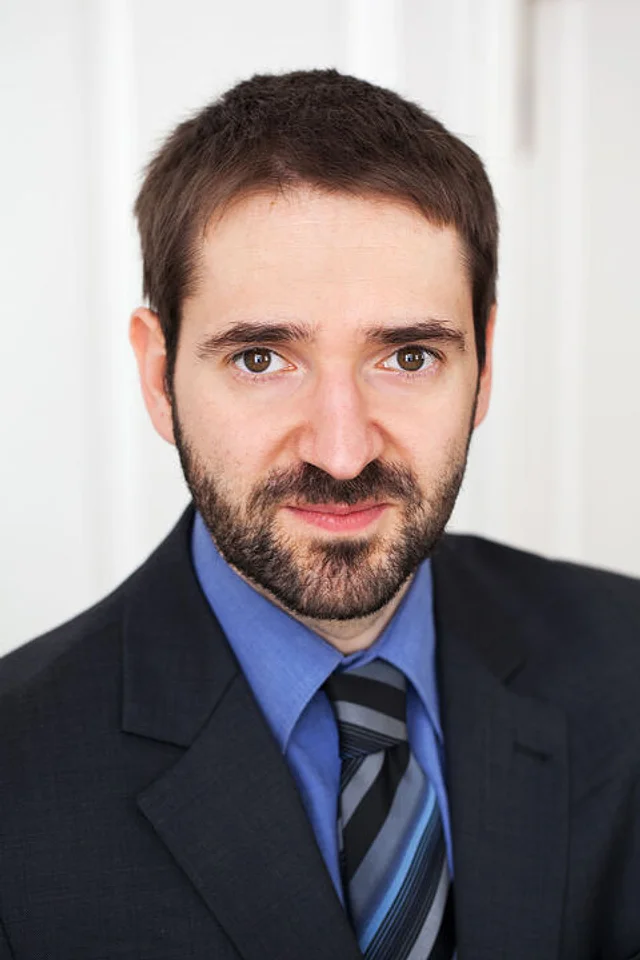
Marco Huymajer
Senior Lecturer Dipl.-Ing. BSc
Marianne Schnellmann
Univ.Ass. MScMarion Murzek
Senior Lecturer Mag.a rer.soc.oec.Dr.in rer.soc.oec.
Marion Scholz
Senior Lecturer Dipl.-Ing.inMag.a rer.soc.oec.
Miki Zehetner
Univ.Ass. DI Bakk.rer.soc.oec. MSc